To meet requirements, customers must adhere to the following:
- Battery Disconnection: To neutralize potential hazards and prevent electrical drain or accidental activation during transit, you must disconnect the negative terminal of the battery. This simple step is a key requirement under IMDG Code Special Provision 961 to allow a vehicle to be consigned as non-dangerous.
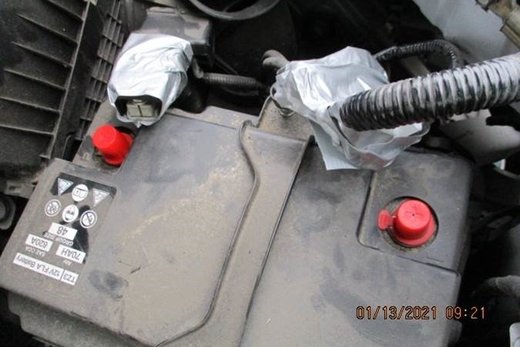
- Terminal Protection: Ensure all exposed battery terminals are securely insulated or taped to prevent short circuits.
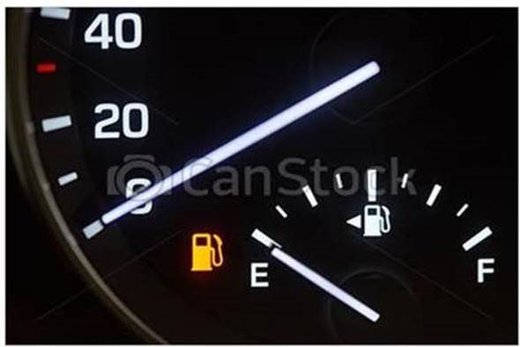
- Fuel Level Limits: For non-hazardous shipping, the fuel tank must be empty.
- Leakage Checks: The vehicle must show no signs of leakage from the battery, engine, or fuel tank prior to loading.
- System Deactivation: Any active alarm or immobiliser systems should be permanently disabled to avoid battery drain and vessel disturbances.
Note on Electric Vehicles (EVs): While standard vehicles can often be rendered non-hazardous by following these steps, many shipping lines now require pure electric vehicles (EVs) to be declared as Dangerous Goods (Class 9) due to the nature of high-voltage lithium-ion batteries.
Please see Grimaldi requirments below
New acceptance and booking requirements for Vehicles loaded in containers - IMDG CODE 2010 / SP961
In order to further support Grimaldi’s handling and acceptance of vehicles in containers as governed by the above IMDG codes. Grimaldi have introduce to the European export market the following additional requirement for the loading and acceptance of container bookings where a vehicle or machinery powered by an internal combustion engine, is to be loaded.
These requirements are already mandatory and fully complied with on our USA/WAF trade.
Vehicle(s) & Personal Effects
Vehicle(s) & Spare Parts
Vehicle(s), Motorcycles & ATVs
Vehicle(s)
Machinery (combustion engines)
unless the following has been complied with.
- Vehicledeclaration covering IMDG 2010/SP961 has been signed and provided (presently required).
We are asking for a total of 3 clear pictures for each vehicle loaded within consisting of :
- VIN number
- The fuel tank gauge to be completely positioned on the left position (empty) with the fuel light illuminated as proof of the empty tank and the ignition switched on at the time.
- Clear, good quality picture of the battery being dis-connected and properly protected from short circuit – as such we need photo of the negative pole of the battery covered by battery plastic cap and cable / clamp thoroughly insulated.
- Registration Number
Batteries terminals must be covered.